


Materials · 6 min read
316L or 304 stainless steel for an outdoor kitchen by the sea
By the sea, an outdoor kitchen calls for 316L stainless steel: its molybdenum improves resistance to pitting, the form of corrosion that salt causes. Grade 304, common in indoor kitchens, copes less well with Caribbean sea air. No stainless steel is immune, however, and regular rinsing with fresh water remains the habit that matters.
By Maison Barbet · Published · Updated
What is the difference between 316L and 304 stainless steel?
Grades 304 and 316L belong to the same family, the austenitic stainless steels. Grade 304 is one of the most widely used: it is often called “18/8”, for roughly 18% chromium and 8% nickel. It is found in many indoor sinks, saucepans and kitchen fittings.
Grade 316 starts from the same base and adds around 2% molybdenum. This element makes the steel more resistant to chlorides, in other words to salt. The letter L stands for low carbon, which matters once the steel is welded.
- 304: roughly 18% chromium and 8% nickel, no molybdenum. Well suited to indoor use, or outdoors away from the coast.
- 316: the same base with around 2% molybdenum, for greater resistance to pitting in salt-laden air.
- 316L: low-carbon 316, whose welded areas keep their corrosion resistance better.
The two grades look identical, and a magnet will not tell them apart: both are only weakly magnetic, if at all. The exact grade is stated in the supplier’s documentation.
Why does salt attack stainless steel?
Stainless steel owes its resilience to chromium. In contact with oxygen, the chromium forms a very thin oxide film on the surface, known as the passive layer, which repairs itself when scratched. It is this film that salt puts to the test.
On the coast, sea spray leaves chlorides on every surface. They can break through the passive layer at isolated points and hollow out tiny cavities: this is pitting corrosion. Caribbean heat and humidity encourage it, particularly on sheltered surfaces that rain never rinses.
Molybdenum makes the passive layer more resistant to this attack. That is why 316L is often described as marine grade, and why Maison Barbet chose it for its stainless steel worktops and sinks.
What does the L in 316L change?
The L stands for low carbon, and it protects the welds. During welding, heat can cause carbon to combine with chromium near the weld. Chromium tied up in this way no longer contributes to the passive layer, and the area becomes more vulnerable to corrosion. By keeping carbon low, 316L reduces that risk, so welds hold their resistance better.
On a kitchen, this detail counts. In the Aube collection, the 316L sink bowl is welded beneath the worktop on the Aube 284 and the Aube Angle. A weld at the edge of a sink is in constant contact with water and washing-up liquid, which is exactly where low carbon earns its place.
Can 316L stainless steel rust by the sea?
On the surface, yes. Even 316L can develop light brown surface marks in salty air, a phenomenon known as tea staining. It affects the appearance of the metal first. It is more pronounced right on the shore and on parts that rain does not wash.
Regular rinsing with fresh water removes salt before it builds up and limits staining. Marks that have already formed usually come off with a non-abrasive stainless steel cleaner. A few habits complete the routine:
- rinse the worktop, upstand and sink with fresh water, more often if the kitchen catches sea spray;
- wipe with a soft cloth or non-abrasive sponge, along the grain of the brushing, then dry;
- never use steel wool or ordinary steel brushes, which leave iron particles that can rust on the surface;
- avoid chlorine-based products such as bleach, and rinse thoroughly after any detergent.
Why a brushed finish, and which way to clean it?
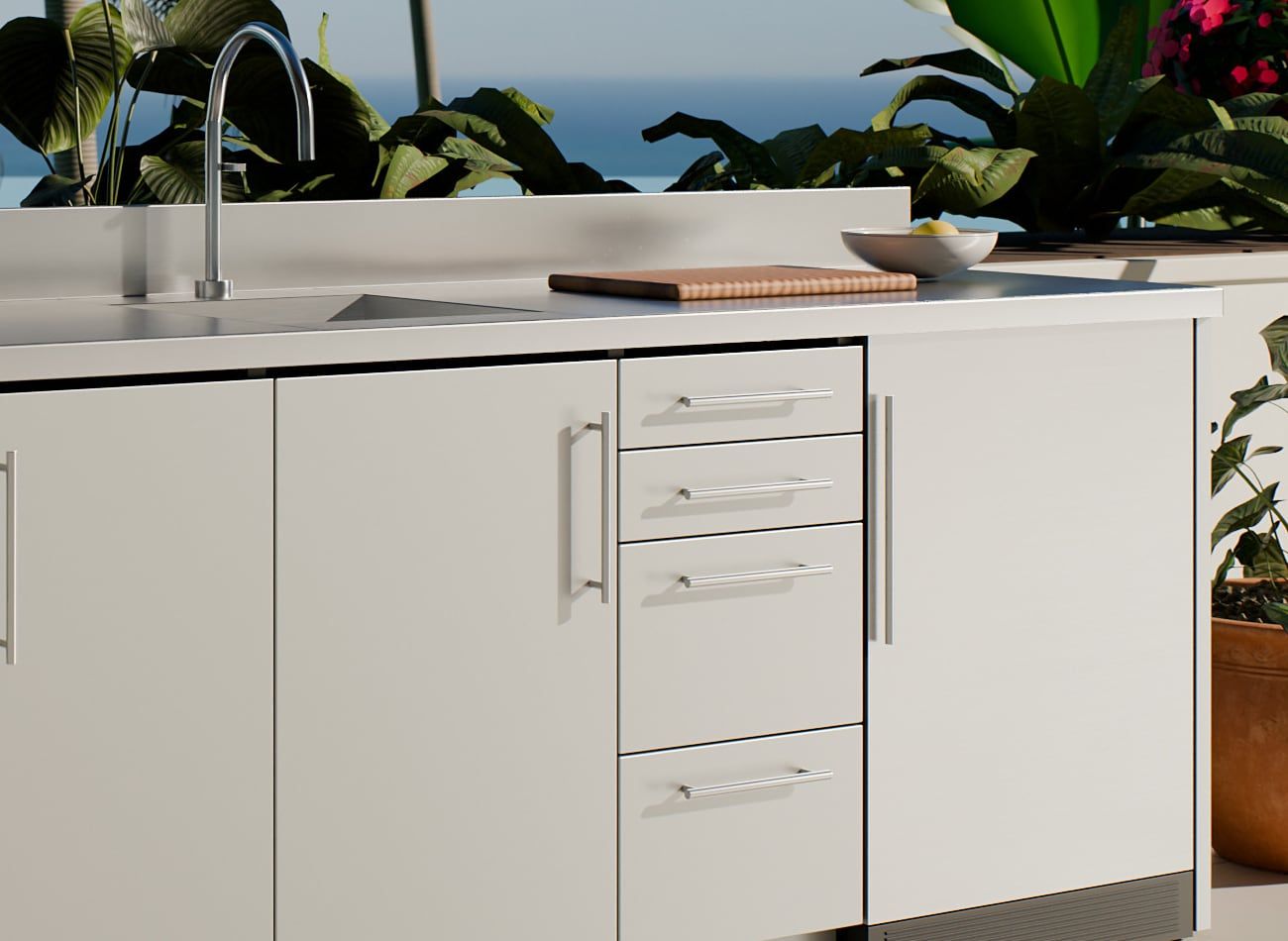
Brushed stainless steel carries fine parallel lines, produced by abrading the surface. This texture softens reflections and makes everyday scratches less visible than on a mirror polish, as they blend into the grain. The Aube worktop and upstand are in brushed 316L stainless steel.
The brushing has a direction, and cleaning should follow it. A cloth drawn along the lines cleans without marking, whereas circular or cross-grain strokes can leave traces that show against the light. The fineness of the brushing matters too: the smoother the surface, the less hold it gives to salt deposits.
How Maison Barbet uses 316L stainless steel
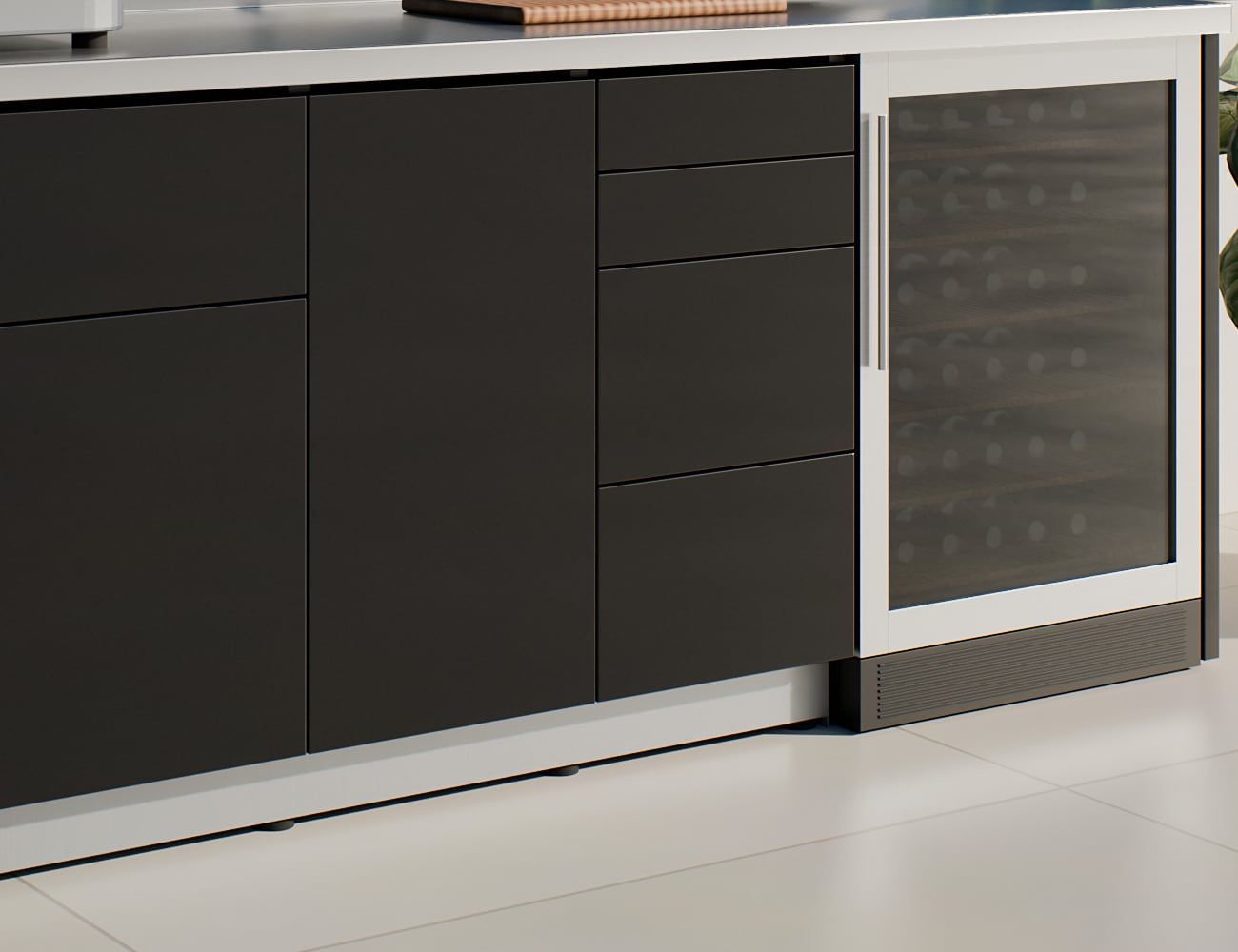
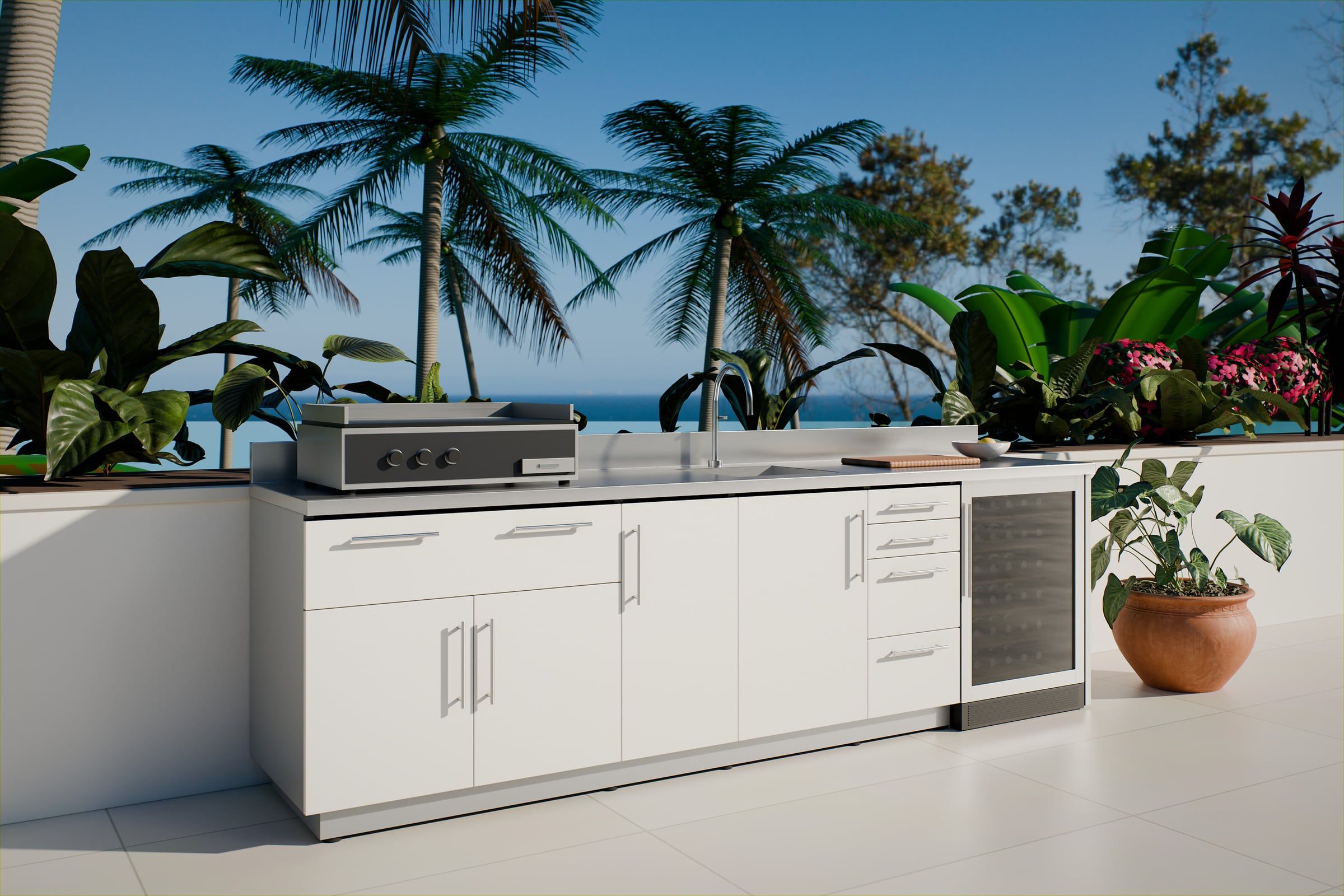
On the Aube collection, the brushed 316L worktop has a 40 mm edge and rises into a 120 mm upstand. It follows the collection’s grid, 650 mm deep and 900 mm high, from the 1.70 m model to the corner composition. The collection also offers a sintered stone worktop as an option.
The Aurore collection pairs a sintered stone top with a 316L undermount sink bowl measuring 450 × 400 × 200 mm. On the islands, the brackets that fix the unit to the slab are also in 316L, as is the optional footrest.
Then there is the meeting of metals. When two different metals touch in the presence of salt water, the less noble of the two can corrode: this is galvanic corrosion. At Maison Barbet, carcasses and fronts are themselves made of 316L stainless steel, lacquered: on Aube, the worktop, the sink and the structure that carries them, being of the same grade, do not form such a pair. These choices are set out on the Materials & craft page.
How exposed your terrace is to spray also shapes the design. At the first meeting we note orientation, prevailing winds and connections. Maison Barbet works in Guadeloupe, Martinique, Saint-Martin and Saint-Barthélemy: book an appointment.
Frequently asked questions
Does 316L stainless steel rust by the sea?
It can develop light brown surface marks, known as tea staining, especially near the shore and on parts that rain does not rinse. The staining affects the appearance of the metal rather than its structure. Regular rinsing with fresh water limits it, and a non-abrasive stainless steel cleaner usually removes it. No stainless steel is immune in salt-laden air.
Can I use 304 stainless steel for an outdoor kitchen near the sea?
You can, but 304 contains no molybdenum and resists salt-induced pitting less well. By the sea it stains sooner and needs more care. It is better suited to a kitchen away from the coast. Within reach of sea spray, 316L is the grade generally recommended, particularly for a worktop and a sink.
What does “18/8” mean on stainless steel?
It refers to a composition of roughly 18% chromium and 8% nickel, that of grade 304. The marking says nothing about molybdenum, so stainless steel sold as “18/8” is not 316. For a kitchen by the sea, ask for the exact grade, which the supplier’s documentation should state.
Which stainless steel does Maison Barbet use?
Maison Barbet uses brushed 316L stainless steel for the worktop and upstand of the Aube collection, and for its sink bowl, welded beneath the worktop. The Aurore sink bowl is also 316L, as are the brackets that anchor the islands to the slab. The carcasses and fronts of all three collections are also in 316L stainless steel, lacquered.
How should I clean a brushed stainless steel worktop?
With fresh water, a mild soap and a soft cloth or non-abrasive sponge, following the direction of the brushing. Rinse, then dry to avoid water marks. Keep steel wool, abrasive powders and chlorine-based products well away. Near the sea, rinsing more often removes salt before it has a chance to build up.