




Care · 7 min read
Outdoor kitchen care by the sea: salt, steel and stone
By the sea, an outdoor kitchen is cared for first with fresh water: rinse off salt deposits regularly, then wipe with a soft cloth. Each material then has its own routine: mild soap and the direction of the brushing for stainless steel, mild detergent and no solvents for the lacquered stainless steel of carcasses and fronts, a neutral cleaner for sintered stone. The care instructions supplied with your kitchen and appliances always take precedence over these general principles.
By Maison Barbet · Published
Why does salt call for regular care?
Sea spray leaves a thin film of salt on every surface. That salt draws moisture from the air and, on stainless steel, its chlorides attack the protective layer that forms naturally on the metal. A deposit left too long can bring up small brown marks, usually superficial.
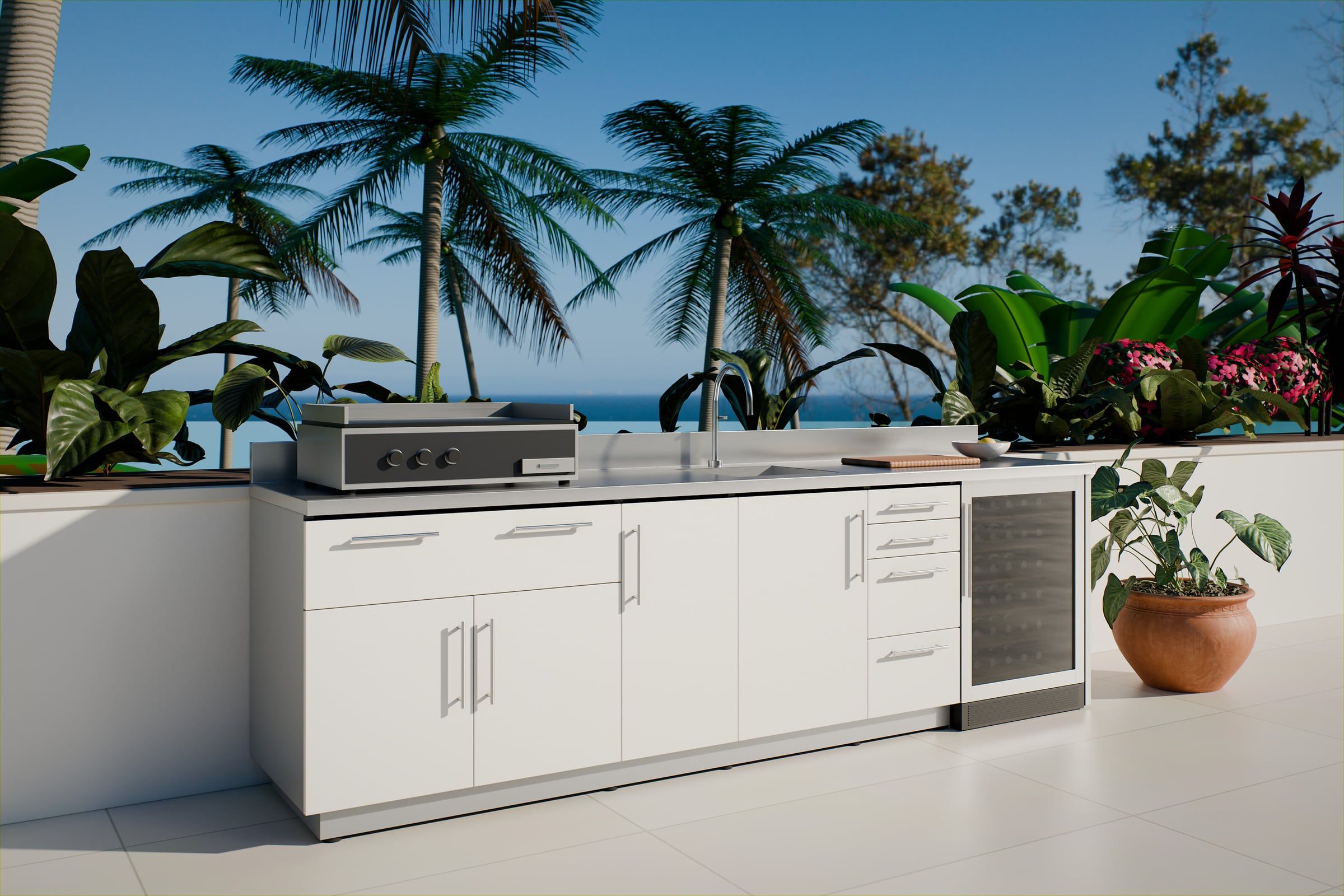
The 316L stainless steel that Maison Barbet uses for the carcasses and fronts of all three collections, and for the worktop, upstand and sink of the Aube collection, is the molybdenum grade known as marine grade: it holds up better against chlorides than other common grades, but does not make rinsing optional. The rhythm follows exposure: the closer the kitchen is to the sea and the more it faces the wind, the more often it needs rinsing.
Sheltered areas need more attention, not less. Under a roof or a covered pergola, rain no longer washes the surfaces and salt builds up; that is often where the first marks appear.
How do you clean 316L stainless steel without harming it?
The basic routine: rinse with fresh water to dissolve the salt, wash with a soft cloth or non-abrasive sponge and diluted mild soap or washing-up liquid, then rinse again and dry with a microfibre cloth. Drying limits the limescale marks that water leaves as it evaporates.
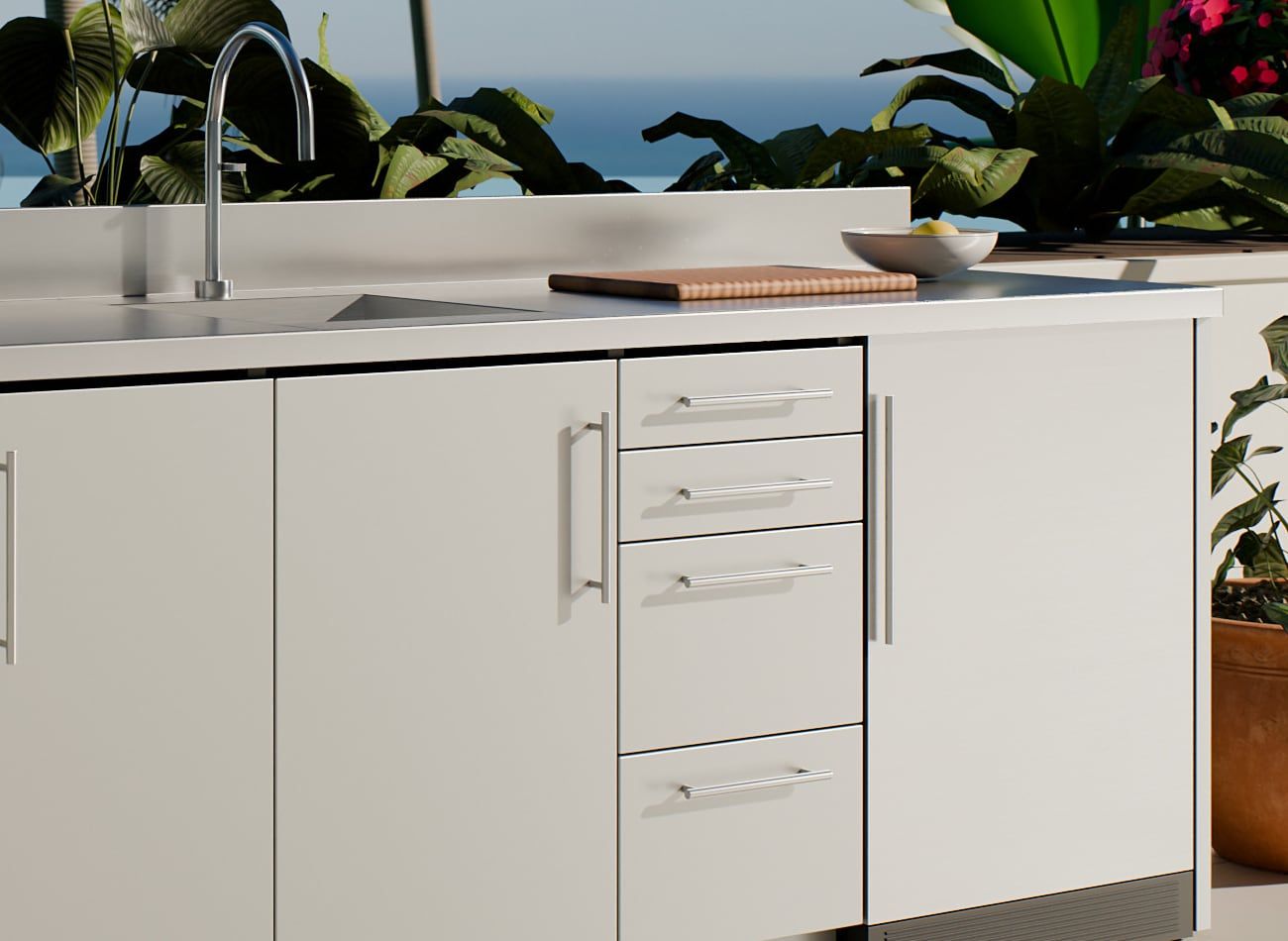
On brushed stainless steel, always wipe in the direction of the brushing, along the fine lines visible on the surface. Rubbing in circles or across the grain, especially with anything slightly abrasive, can scratch the finish and leave duller patches. Aube’s worktop and 120 mm upstand are treated the same way, as is the bowl welded beneath the worktop on the Aube 284 and Aube Angle.
Keep these away from stainless steel:
- steel wool and metal scourers, which leave iron particles that rust and stain the surface;
- abrasive sponges and scouring powders, which scratch the brushed finish;
- chlorine bleach and chlorine-based products, whose chlorides attack stainless steel just as salt does;
- acid-based cleaners, especially those containing hydrochloric acid, and harsh descalers;
- ordinary steel objects left on a damp worktop, such as an aerosol can or a utensil, which can print a ring of rust.
Appliances follow their own manuals: grates, cooking plates and seals are not cared for like a worktop.
How should lacquered stainless steel be cleaned?
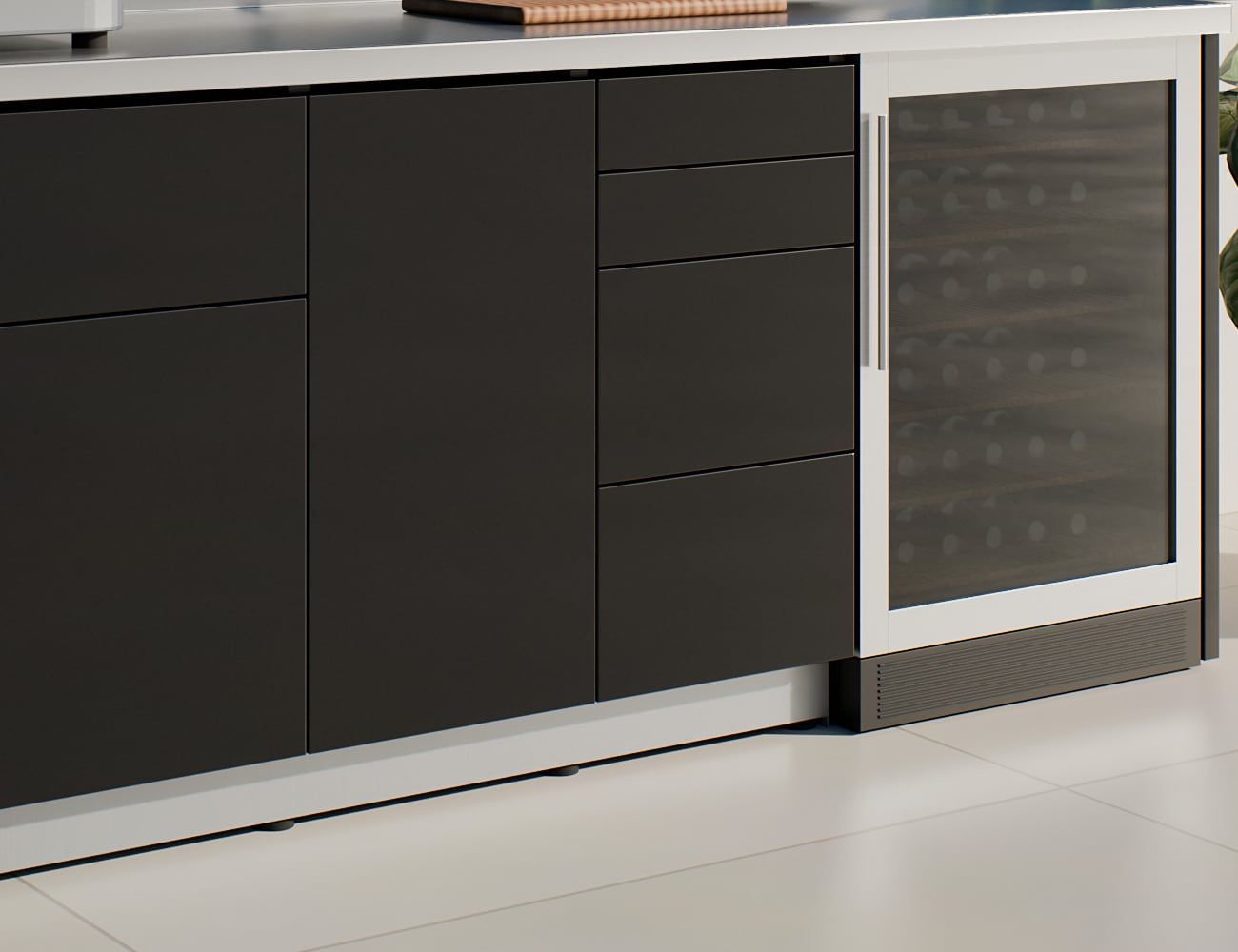
The carcasses and fronts of Maison Barbet kitchens are lacquered 316L stainless steel. Clean the lacquer with water and a mild detergent, using a soft sponge or cloth, then rinse and dry. Solvents such as acetone, thinners or white spirit, and abrasive products, should be avoided: they can dull or scratch the lacquer.
On the finely textured colours in the chart, such as Sanded white or Storm grey, a soft brush lifts salt from the grain of the surface.
While you are at it, clear the openings that let air and water through. The base of the carcass is perforated and the plinth stops 15 mm above the floor so that water drains away; the gas compartment is ventilated through that gap and through a shadow gap beneath the worktop. Leaves, sand and debris should not block them.
How do you look after a sintered stone worktop?
The tops of Aurore and Crépuscule are 12 mm sintered stone, a mineral material pressed and then fired at high temperature; Aube offers it as an option. Day to day, a soft cloth and a neutral cleaner are enough, followed by a rinse with clean water and drying.
Sintered stone is known for its low porosity, but that does not make it indifferent to what is left on it. Acidic, sugary or oily liquids (lime juice, wine, rum punch, cooking oil) should be wiped up promptly. Avoid scouring powders and abrasive pads, which can mark the finish. Take care of the edges too, which are more exposed to knocks than a flat surface.
What should you do before a long absence, and after a storm?
For owners who spend part of the year away from Saint-Martin or Saint-Barthélemy, the routine before leaving matters. Clean, rinse and dry every surface, empty the fridge or wine cooler as its manual advises, and close the valve on the gas bottle. A cover keeps off salt and dust provided it is breathable and fitted over a dry kitchen: a waterproof tarpaulin traps humidity and encourages condensation. Nor should it block the ventilation gaps of the gas compartment.
If the house stays closed during the hurricane season, from 1 June to 30 November, ask whoever looks after the property, or the villa’s manager, to give the kitchen a fresh-water rinse from time to time.
Ahead of a forecast storm, follow official guidance from Météo-France and the préfecture, and put away or secure anything that could blow away, covers included. Afterwards, once it is safe, rinse the whole kitchen thoroughly: strong winds can carry salt well inland. Clear the ventilation and drainage gaps, then inspect the surfaces, the island fixings and the appliances. Before relighting the gas or switching on a socket that has taken in water, have the installation checked by a qualified professional.
Which routine should you keep?
- After each use: wipe away splashes, clean the cooking area as its manual describes, rinse the sink.
- Regularly, according to exposure: rinse the whole kitchen with fresh water, wash with mild soap, dry.
- Before an absence: full clean, gas closed, breathable cover over a dry kitchen.
- After strong winds or a storm: thorough rinse, inspection, and a professional check if water has reached the gas or the electrics.
These principles apply to most outdoor kitchens. They do not replace the instructions supplied with your kitchen and appliances, which prevail wherever they differ. For a seafront project, exposure to salt is discussed from the first meeting: it shapes the choice of materials, described on the Materials & craft page.
Frequently asked questions
How often should an outdoor kitchen by the sea be rinsed?
No single frequency suits every terrace: the rhythm follows exposure. A seafront kitchen facing the wind needs rinsing more often than a sheltered one set back from the shore. Rinse after any spell of wind laden with sea spray, and before a long absence. Covered areas, which rain never washes, call for particular attention.
Can I use bleach on a stainless steel worktop?
No. Chlorine bleach and chlorine-based products bring chlorides, the same ones found in salt, and can stain or attack stainless steel, 316L included. Use diluted mild soap and a soft cloth wiped along the grain, then rinse with fresh water and dry. The instructions supplied with your kitchen take precedence.
Should an outdoor kitchen be covered during a long absence?
A cover helps, provided it is breathable and fitted over a clean, dry kitchen. A waterproof tarpaulin traps humidity and encourages condensation, which defeats the purpose. The cover must not block the ventilation gaps of the gas compartment. Before leaving, close the valve on the gas bottle, and arrange occasional fresh-water rinsing if you will be away for months.
How do you clean an outdoor sintered stone worktop?
With a soft cloth and a neutral cleaner, followed by a rinse with clean water and drying. Wipe up acidic, sugary or oily liquids such as lime juice, wine or cooking oil promptly. Avoid scouring powders and abrasive pads, which can mark the finish. Sintered stone does not usually need a water-repellent sealer; follow the instructions supplied with your kitchen.